
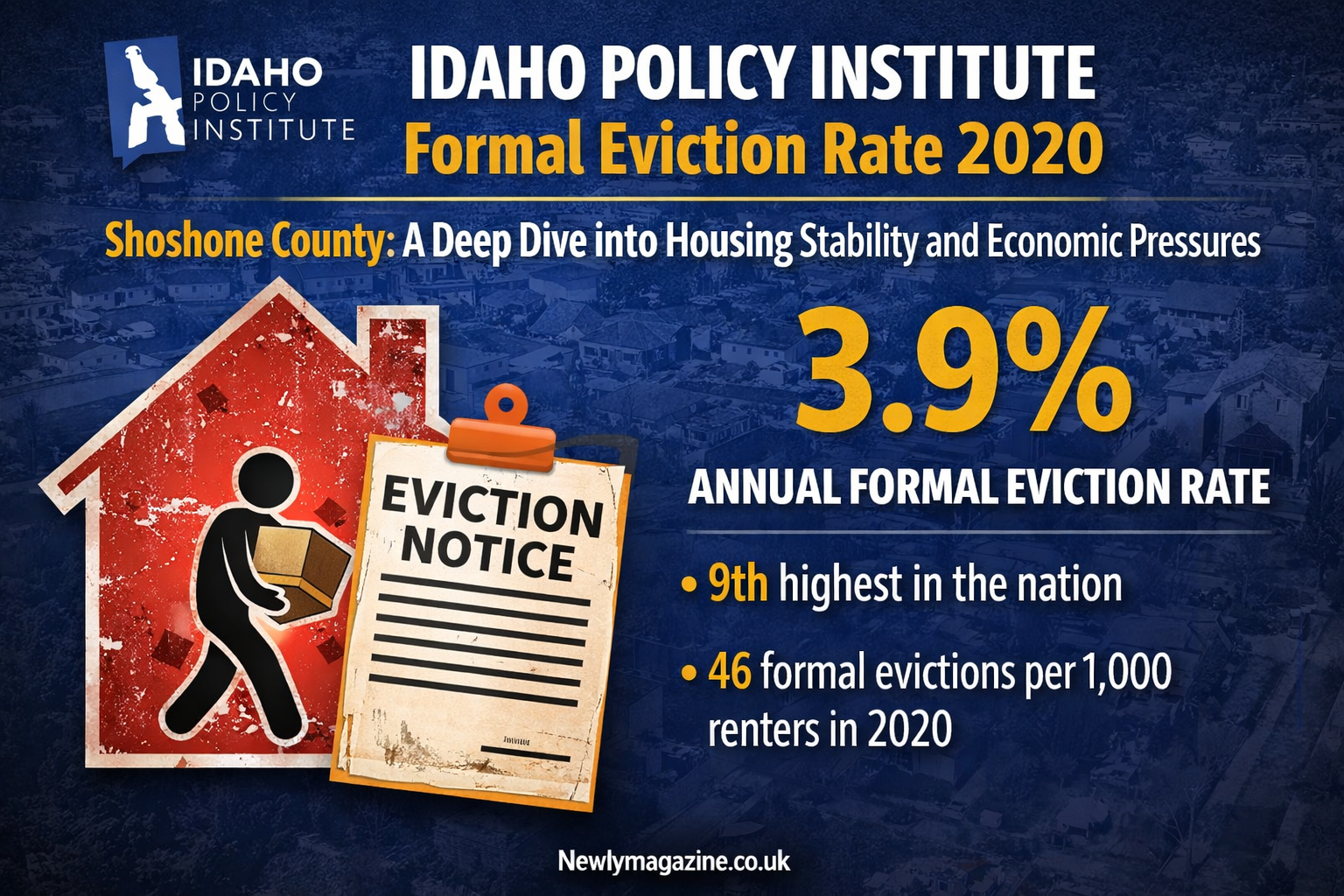
The year 2020 marked a turning point for housing stability across the United States, as the COVID-19 pandemic disrupted economies, employment, and daily life. In rural communities such as Shoshone County, Idaho, these disruptions were particularly pronounced due to limited economic diversification and already fragile housing systems. The focus keyword—idaho policy institute formal eviction rate 2020 shoshone county—captures a critical aspect of this period: the measurement and analysis of formal eviction filings and their implications. Data and insights from the Idaho Policy Institute provide an essential lens through which to understand these dynamics. This article explores the formal eviction rate in Shoshone County during 2020, the factors influencing it, and the broader social and economic consequences.
Understanding Formal Eviction Rates
Before diving into the specifics of Shoshone County, it is important to understand what a formal eviction rate represents. A formal eviction occurs when a landlord files a legal case in court to remove a tenant from a property due to nonpayment of rent or lease violations. The formal eviction rate is typically calculated as the number of eviction filings relative to the number of renter households in a given area.
The Idaho Policy Institute uses court filing data combined with census estimates to produce these rates. This method captures only legally documented evictions, meaning it excludes informal evictions—such as when tenants leave voluntarily due to pressure or financial hardship. As a result, formal eviction rates often underestimate the true scale of housing instability.
In 2020, eviction rates across the United States were influenced by an unprecedented combination of economic downturn and government intervention. Federal and state eviction moratoriums temporarily restricted landlords from removing tenants for nonpayment, significantly altering eviction patterns.
Shoshone County: A Unique Socioeconomic Landscape
Shoshone County is a rural county located in northern Idaho, historically known for its mining industry. Over time, economic shifts have reduced reliance on mining, but the region still faces challenges such as limited job opportunities, lower median incomes, and an aging population.
Housing in Shoshone County reflects these economic realities. Rental markets are relatively small, and housing stock often consists of older properties. Many residents are cost-burdened, meaning they spend a significant portion of their income on housing. These factors make the county particularly vulnerable to economic shocks, such as those experienced during the COVID-19 pandemic.
The Impact of COVID-19 on Housing Stability
The onset of COVID-19 in early 2020 triggered widespread job losses and reduced working hours, particularly in service industries. While Shoshone County is not heavily urbanized, its residents still felt the economic ripple effects. Reduced tourism, business closures, and disruptions to local industries contributed to financial instability among renters.
In response, federal and state governments implemented eviction moratoriums to prevent a surge in homelessness. These policies temporarily halted eviction proceedings for tenants unable to pay rent due to pandemic-related hardships. While these measures provided short-term relief, they also created a backlog of unpaid rent and delayed legal actions.
The Idaho Policy Institute noted that eviction filings dropped significantly during the months when moratoriums were in effect. However, this decline did not necessarily indicate improved housing stability; rather, it reflected legal restrictions on filings.
Idaho Policy Institute Findings on Formal Eviction Rate 2020
According to research conducted by the Idaho Policy Institute, the formal eviction rate in Shoshone County during 2020 was notably lower than in previous years. This reduction was primarily due to eviction moratoriums and emergency rental assistance programs.
However, the data also revealed important nuances:
- Eviction filings were concentrated in periods when restrictions were temporarily lifted.
- Certain demographic groups, including low-income households and single-parent families, were disproportionately affected.
- Rural counties like Shoshone experienced smaller absolute numbers of filings but still faced significant impacts relative to their population size.
The formal eviction rate for Shoshone County in 2020 must therefore be interpreted in context. While the numerical rate may appear low, it does not fully capture the underlying financial stress experienced by renters.
Comparing Shoshone County to Statewide Trends
When comparing Shoshone County to broader trends in Idaho, several patterns emerge. Urban areas such as Boise and Idaho Falls typically have higher eviction rates due to larger populations and more active rental markets. However, rural counties often face unique challenges that are not reflected solely in eviction statistics.
The Idaho Policy Institute highlights that rural eviction dynamics differ in several ways:
- Tenants may rely more on informal agreements with landlords.
- Evictions may occur without formal court filings.
- Limited access to legal resources can affect tenants’ ability to respond to eviction notices.
The formal eviction rate in Shoshone County may underrepresent the true level of housing instability compared to urban areas.
The Role of Government Policies and Assistance Programs
Government intervention played a critical role in shaping eviction trends during 2020. Key policies included:
- Federal eviction moratoriums issued by the Centers for Disease Control and Prevention (CDC)
- State-level restrictions on eviction proceedings
- Emergency rental assistance programs funded through federal relief packages
These measures helped prevent a surge in formal evictions in Shoshone County. Many tenants were able to remain in their homes despite financial difficulties, reducing the number of court filings.
These policies also had limitations. Not all tenants were aware of their rights under the moratoriums, and some landlords continued to pursue evictions under specific circumstances. Additionally, delays in distributing rental assistance meant that some households still faced significant challenges.
Long-Term Implications of 2020 Eviction Trends
The reduced formal eviction rate in Shoshone County during 2020 should not be interpreted as a sign of long-term stability. Instead, it reflects a temporary pause in eviction activity due to extraordinary circumstances.
As moratoriums expired and economic conditions evolved, many of the underlying issues resurfaced. Renters who accumulated debt during 2020 faced increased risk of eviction in subsequent years. Landlords, particularly those with limited financial reserves, also experienced strain.
The Idaho Policy Institute emphasizes that understanding 2020 eviction data is crucial for developing effective housing policies. By analyzing how interventions affected eviction rates, policymakers can design strategies to promote long-term stability.
Social and Economic Consequences
Evictions have far-reaching consequences beyond the immediate loss of housing. In Shoshone County, as in other rural areas, eviction can lead to:
- Increased homelessness or reliance on temporary housing
- Disruption of employment and education
- Negative impacts on physical and mental health
- Strain on community resources and social services
The relatively small population of Shoshone County means that even a modest number of evictions can have a significant impact on the community. Families may be forced to relocate, children may change schools, and local support systems may be stretched thin.
Lessons Learned and Future Considerations
The experience of 2020 provides valuable lessons for addressing housing instability in Shoshone County and beyond. Key takeaways include:
- Importance of Data Collection
Accurate and timely data, such as that provided by the Idaho Policy Institute, is essential for understanding eviction trends and identifying at-risk populations. - Need for Comprehensive Support
Eviction prevention requires a combination of policies, including rental assistance, legal support, and tenant education. - Addressing Rural Challenges
Policies must account for the unique characteristics of rural areas, where informal housing arrangements and limited resources can complicate eviction dynamics. - Building Resilient Housing Systems
Long-term solutions should focus on increasing affordable housing availability and improving economic opportunities for residents.
Read More: Golden State Warriors vs Sacramento Kings Match Player Stats
Conclusion
The idaho policy institute formal eviction rate 2020 shoshone county serves as a critical case study in understanding how external shocks and policy interventions influence housing stability. While the formal eviction rate in Shoshone County declined during 2020, this decrease was largely the result of temporary measures rather than a fundamental improvement in economic conditions.
Insights from the Idaho Policy Institute reveal the complexity of eviction dynamics, particularly in rural communities. By examining these trends in depth, policymakers, researchers, and community leaders can better address the root causes of housing instability and work toward sustainable solutions.
The story of Shoshone County in 2020 is not just about numbers—it is about the resilience of communities, the challenges faced by vulnerable populations, and the ongoing effort to ensure that everyone has access to safe and stable housing.

Leave a Reply