
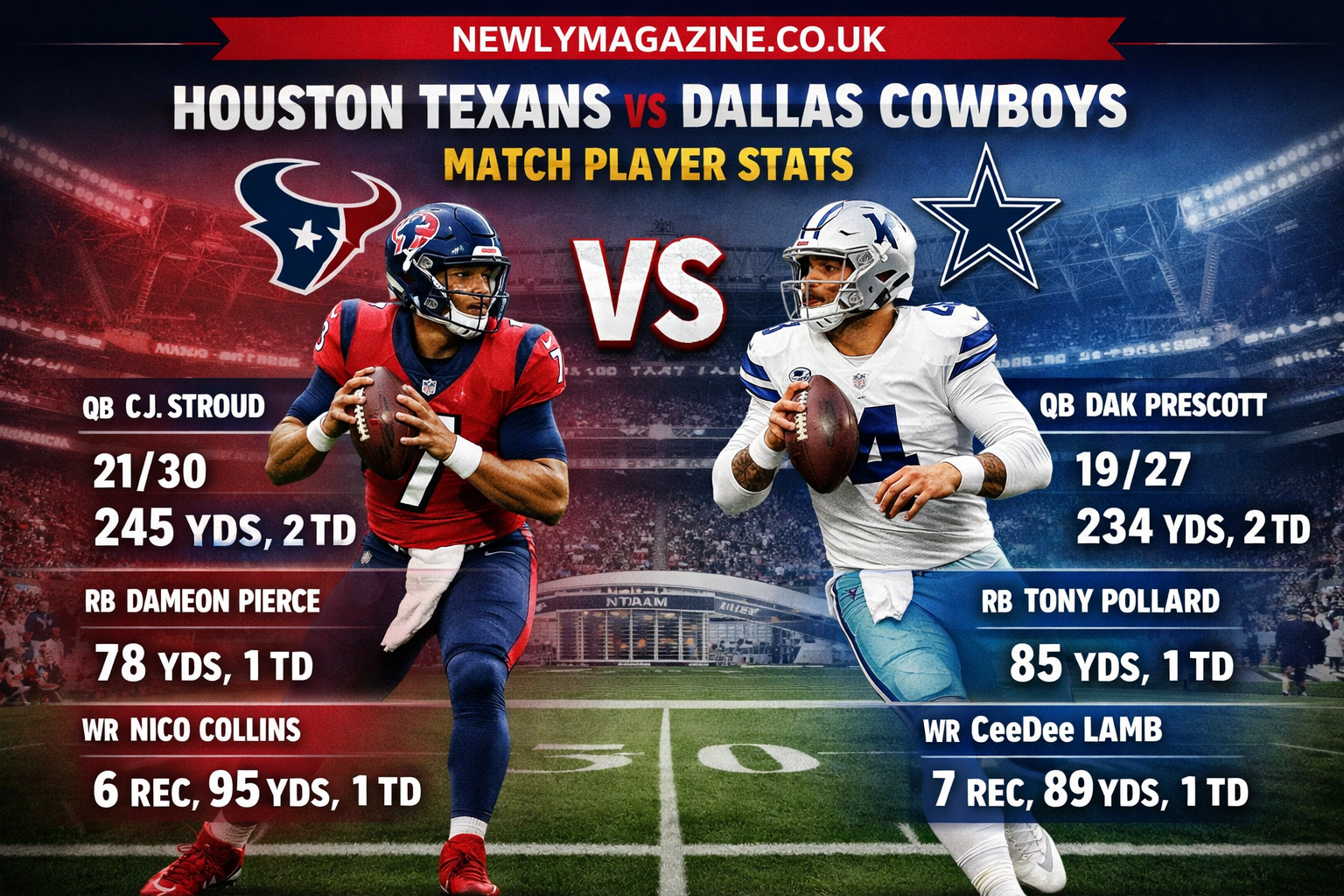
The clash between the Houston Texans and the Dallas Cowboys has always carried a unique level of excitement, especially given their shared home state of Texas. Whether it’s a preseason face-off, a regular-season battle, or simply a highly anticipated interconference matchup, fans eagerly analyze every detail, particularly the player statistics that define the outcome of the game. In this in-depth article, we will explore the Houston Texans vs Dallas Cowboys match player stats, focusing on individual performances, positional breakdowns, and what these numbers reveal about both teams’ strengths and weaknesses.
Overview of the Houston Texans vs Dallas Cowboys Rivalry
The Texans and Cowboys do not meet frequently due to being in different conferences, every matchup between them feels like a rivalry game. The Cowboys, historically one of the most successful franchises in the NFL, often enter the game with high expectations. Meanwhile, the Texans, a relatively younger franchise, use these matchups as an opportunity to prove their growth and competitiveness.
Player statistics from these games often highlight the contrast in experience, strategy, and roster depth. The Cowboys typically showcase star power and consistency, while the Texans rely on emerging talents and dynamic plays. Understanding these stats provides a clearer picture of how each team approaches the game and adapts under pressure.
Quarterback Performance Analysis
Quarterbacks play a pivotal role in shaping the outcome of any NFL game, and this matchup is no exception. For the Dallas Cowboys, Dak Prescott usually leads the offensive charge. Known for his accuracy and leadership, Prescott often records impressive passing yards, completion percentages, and touchdown counts. In a typical Texans vs Cowboys game, Prescott might throw for over 250 yards with multiple touchdowns, showcasing his ability to read defenses and execute plays efficiently.
The Houston Texans often rely on young quarterbacks like C.J. Stroud, whose performance is crucial for the team’s success. Stroud’s stats usually reflect a mix of learning and brilliance, with strong passing yards complemented by occasional turnovers. His ability to extend plays and connect with receivers under pressure adds an exciting dimension to the Texans’ offense.
Comparing quarterback stats such as passing yards, touchdown-to-interception ratio, and quarterback rating reveals the strategic differences between the two teams. While Prescott often demonstrates consistency, Stroud brings unpredictability and growth potential.
Running Back Contributions and Ground Game Impact
The ground game is another critical aspect of the Houston Texans vs Dallas Cowboys match player stats. The Cowboys frequently rely on players like Tony Pollard, who is known for his speed, agility, and ability to break through defensive lines. Pollard’s rushing yards, yards per carry, and touchdowns often play a significant role in maintaining offensive balance for Dallas.
For the Texans, running backs such as Dameon Pierce bring physicality and determination to the field. Pierce’s stats typically include hard-earned rushing yards and crucial first downs, reflecting his role as a workhorse back. His ability to gain yards after contact is especially valuable against a disciplined Cowboys defense.
Analyzing rushing attempts, total yards, and red-zone efficiency highlights how each team utilizes its running game. The Cowboys often employ a balanced approach, while the Texans may rely more heavily on their running backs to control the tempo of the game.
Wide Receivers and Passing Game Dynamics
Wide receivers are essential in converting quarterback efforts into points. For the Cowboys, CeeDee Lamb stands out as a primary target. Lamb’s stats often include high reception counts, significant yardage, and crucial touchdowns. His route-running ability and chemistry with Prescott make him a constant threat to opposing defenses.
The Texans counter with emerging talents like Nico Collins, who has shown the ability to deliver big plays. Collins’ performance in terms of receptions, yards, and yards after catch demonstrates his importance in the Texans’ passing game.
When comparing receiving stats, key metrics include receptions, yards per catch, and touchdown receptions. These numbers reveal how effectively each team’s passing game operates and which players are making the biggest impact on the field.
Defensive Player Stats and Game-Changing Plays
Defense often determines the outcome of tightly contested games, and both teams boast players capable of making game-changing plays. For the Cowboys, Micah Parsons is a standout performer. Parsons consistently records high tackle counts, sacks, and quarterback pressures, making him one of the most disruptive defensive players in the league.
The Texans’ defense features players like Will Anderson Jr., whose stats reflect his ability to contribute in both pass-rushing and run defense. Anderson’s tackles, sacks, and tackles for loss highlight his growing influence on the Texans’ defensive unit.
Key defensive stats to consider include total tackles, sacks, interceptions, and forced fumbles. These numbers often indicate momentum shifts and can significantly impact the final score of the game.
Special Teams Performance and Hidden Contributions
While often overlooked, special teams play a crucial role in shaping the Houston Texans vs Dallas Cowboys match player stats. Kickers, punters, and return specialists can influence field position and scoring opportunities.
For the Cowboys, reliable kicking and strong punt returns often provide an advantage in close games. Similarly, the Texans’ special teams unit focuses on consistency and minimizing errors. Key stats in this category include field goal percentage, average punt distance, and return yards.
These contributions may not always grab headlines, but they are essential for maintaining competitive balance and capitalizing on scoring chances.
Key Statistical Comparisons Between the Teams
When analyzing the Houston Texans vs Dallas Cowboys match player stats, several comparisons stand out:
- Total Offense: Cowboys often lead in total yards due to a more established offense.
- Turnovers: Texans may experience higher turnover rates, especially with younger players.
- Third-Down Efficiency: Cowboys typically excel in converting crucial third downs.
- Red-Zone Performance: Both teams strive for efficiency, but Dallas often has the edge due to experience.
These comparisons provide valuable insights into how each team approaches the game and where they hold advantages.
Impact of Coaching and Strategy on Player Stats
Coaching strategies significantly influence player statistics. The Cowboys’ coaching staff often emphasizes a balanced offensive approach and aggressive defense, which is reflected in their player stats. Meanwhile, the Texans focus on development and adaptability, allowing younger players to gain experience and improve over time.
Play-calling, defensive schemes, and in-game adjustments all contribute to the statistical outcomes observed in these matchups. Understanding these factors helps explain why certain players perform better in specific situations.
What the Stats Reveal About Future Matchups
The Houston Texans vs Dallas Cowboys match player stats not only highlight past performances but also provide clues about future encounters. The Cowboys’ consistency and depth suggest they will remain competitive, while the Texans’ युवा roster indicates potential for growth and improvement.
As players like Dak Prescott and C.J. Stroud continue to evolve, their performances will shape the narrative of this matchup. Similarly, emerging stars on both teams will play a crucial role in determining future outcomes.
Read More: Baltimore Orioles vs San Francisco Giants Match Player Stats
Conclusion
The Houston Texans vs Dallas Cowboys match player stats offer a comprehensive view of how each team performs across different aspects of the game. From quarterback efficiency and rushing dominance to defensive prowess and special teams contributions, every statistic tells a story.
The Cowboys often hold an edge due to experience and star power, the Texans bring energy, determination, and potential to the field. This combination makes every matchup between these two Texas teams an exciting and unpredictable contest.
By analyzing these player stats in detail, fans and analysts can gain a deeper understanding of the game and appreciate the individual performances that define each encounter. As both teams continue to evolve, their statistical battles will remain a key element of their ongoing story in the NFL.

Leave a Reply